What Massage Training Should I Do?
In 2026, there are a number of ways to become a massage therapist and start a new, rewarding career. Gone are the days of using up all of your weekends for two years or as an adult having to go back to college with a group of teenagers, thankfully the training world is catching up with the times.
Really, if you are asking this question then hopefully you have already considered something very important - WHY do I want to become a massage therapist? Now we are a bit biased and think it’s the best job ever but if you have yet to navigate that question then you can check out our BLOG HERE, and see for yourself what it is really all about.
Ok, so you have figured out that becoming a massage therapist is right for you (yippee!), so now it’s time to have a think about what comes next. It is time to choose your training!
What Massage Training Should I do?
The one your heart is drawn to. There, I said it. Call me woo woo all you like but this work is all about heart, connection and being of service to others so why should your training not be and feel the same way. Yes, sometimes we have to be practical and pick the closest/easiest logistically option in life, but if you can, explore around and find the one that you feel drawn to most. Maybe that means joining us in Cornwall, maybe it doesn’t and you feel the pull another way - this choice matters so follow your heart.
College Based and Weekend Learning Training
These are a great option for anyone working full time that just doesn’t have the option to take time off work to complete their studies. These trainings tend to be a more formal learning environment with the Anatomy & Physiology portion being class room based. If the idea of sitting for 4 hours a day learning anatomy through a powerpoint sounds unpleasant, then this may not be the option for you. That being said, being class room based means you can ask questions and break information down in a way that is not available to you when learning it online so, there are pros and cons.
Fully Online Massage Training
If you are looking for the cheapest option and are getting drawn into fully online courses, please, don’t. It is impossible to learn massage through a computer screen. No matter how good the course looks and how fancy and convincing the marketing is, you will not feel confident or comfortable with any skills you have learnt. Furthermore, insurance companies will not accept these courses.
Blended Learning Massage Training
This, is the category that we fall into where the Anatomy, Physiology & Pathology sections of the training are all held through an online portal, and all of the practical training is done face to face in our immersive training. Being able to do the A&P online means that theory learning can be done around your day to day schedule. It also means that you can do it when you feel mentally in the head space to do it and at times that suit you best. The majority of our students have not been in education for a number of years and sitting down to hours and hours of powerpoint presentations in a formal setting feels daunting. Online also means that you can learn your own way! Maybe you are a note taker and writing down is how that information gets into your head. Or maybe you like to talk it through, draw it out, create a post it flash cards or need to read aloud - you can do it whichever way you wish! The key thing is that your practical training is all done face to face, hands on with a group and a teacher there to support and guide you.
Residential and Immersive Massage Training
Personally, we think this is the best way to learn. Turn up, un pack, get fed by an in house chef and don’t have to worry or think about anything other than your learning? Yes please!! Being residential means you can really immerse yourself and let go of a whole host of other worries. It also fosters and creates a truly supportive bond with your fellow trainees that will become your community for years to come. Plus, it’s a hell of a lot of fun and we share endless laughs, stories and experiences outside of our learning too. You can read more about why we run our training in this way, HERE.
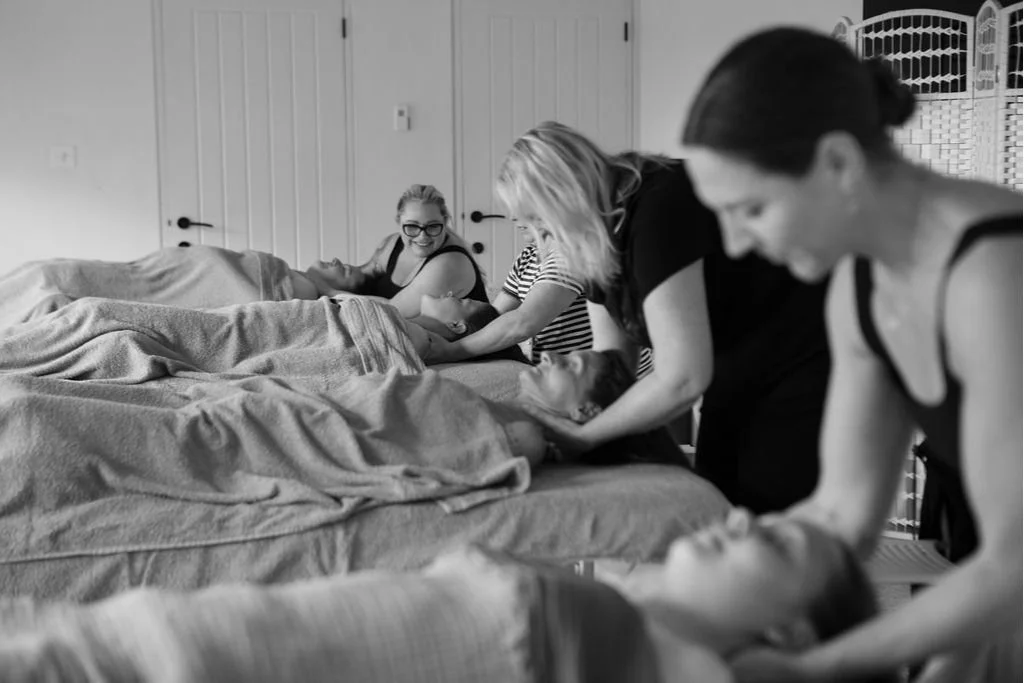
Learning together!
What Level do I Need?
You must complete a minimum Level 3 Diploma training in order to be classed as a qualified , and insurable, massage therapist. You can read our blog ‘What is a Level 3 Diploma in Massage Therapy’, to understand it more. Regardless of what a courses marketing tells you, you will not be able to gain insurance or employment as a massage therapist with a Level 1 or 2 training.
How Long Does it Take to Become a Massage Therapist?
In this day and age, we are used to things happening immediately. Learning to become a massage therapist, is not one of those things. Regardless of whether you choose to go to college for over a year or do an immersive training, there is no real fast track. Beware of any training claiming so! Once you take into consideration your Anatomy & Physiology, your practical training and your case studies, you are realistically looking at at least 4 to 6 months. The quickest I have had a student complete from start to finish is 2.5 months, but safe to say they locked in and focused on just their learning in that time. I have also had students take their time with their A&P and take over a year to get their certificate. Both of those students went on to be incredible therapists and have great careers, they just got their in the way that worked best for them.
Your Massage Training Search Essentials
Here are our top 5 essentials when looking for a great massage training!
Fully accredited - Your training must be fully accredited and meet the highest standards.
Experienced teachers - Find a teacher that has experience in their field and has genuinely lived their craft with passion! Hi, I’m Amy by the way.
Insured school and an insurable training - Never be afraid to ask your potential training school for their credentials!
Great communication and support - You want a training where you know you are genuinely cared about, and not just another enrolment number. Pick up the phone and chat to the teacher, get to know them and discover if that level of support will be there for you. Any genuine massage training school will be happy to answer all of your questions and be honest with whether their training is right for you. This is something we pride ourselves on at Massage Training UK. This includes support AFTER your training to!
Look at the schools reviews - Easy, jump on Google and check out the schools feedback. You want to see real student experiences and not just rely on what the training school is telling you. You can see ours, HERE.